Who Owns Jaiho Rummy
How the Platform Developed
Jaiho Rummy has become one of the recognizable names in India’s online card gaming environment, especially among players looking for digital rummy experiences connected to mobile accessibility and localized gameplay structures. As online gaming platforms expanded across India during the last decade, several companies entered the industry with the goal of combining traditional card entertainment with modern mobile technology. Jaiho Rummy emerged within this competitive environment and gradually established a recognizable identity among users interested in online rummy access.
Understanding who owns Jaiho Rummy requires examining both the operational structure behind the platform and the broader business ecosystem surrounding online gaming companies in India. Many modern gaming brands operate through parent organizations, digital entertainment groups, or technology-focused management companies that oversee platform development, payment integration, customer support systems, and marketing operations.
Online rummy platforms in India are commonly managed through private companies focused on digital gaming services. These organizations typically oversee software infrastructure, account management systems, responsible gaming tools, mobile optimization, and promotional activity. In many cases, the visible gaming brand acts as the public-facing identity, while the parent company handles operational and financial management behind the scenes.
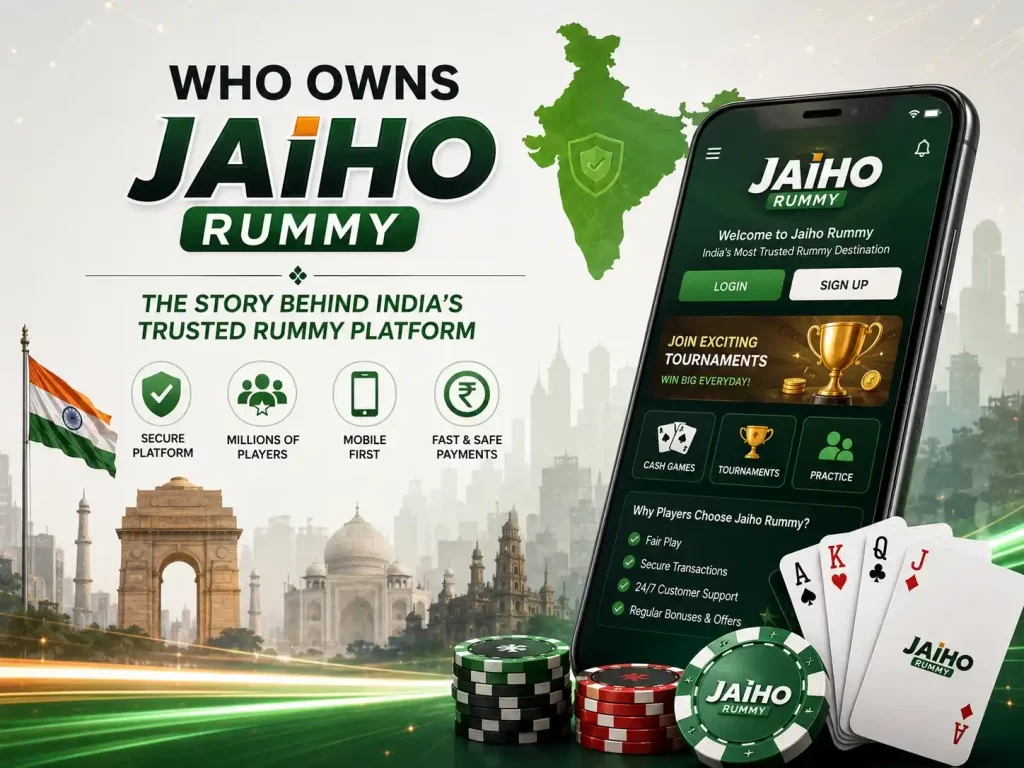
Jaiho Rummy developed during a period when smartphone adoption in India accelerated rapidly. More users gained access to affordable Android devices and mobile internet services, allowing gaming platforms to reach broader audiences across different regions. This mobile-first expansion influenced how companies structured their platforms, including account systems, payment integration, and game accessibility.
Players researching ownership information often want to understand the legitimacy, operational background, and long-term reliability of a gaming platform. Ownership transparency can influence how users evaluate account security, financial handling, customer support quality, and platform consistency over time.
Many gaming brands operating in India rely on centralized technology management teams responsible for maintaining server infrastructure, account authentication systems, wallet integration, and tournament operations. These backend systems are usually overseen by dedicated technical departments rather than the public-facing gaming brand alone.
| Ownership Area | Main Responsibility | Operational Impact |
|---|---|---|
| Platform Management | Controls daily operations | Maintains service continuity |
| Technology Division | Handles software systems | Supports gameplay stability |
| Payment Infrastructure | Processes transactions | Improves wallet functionality |
| Customer Support Teams | Manages user assistance | Resolves account issues |
| Marketing Operations | Promotes platform visibility | Expands player reach |
The Indian online gaming market became increasingly competitive as more platforms introduced mobile-focused services. Companies behind these gaming brands recognized that players expected quick registration systems, responsive interfaces, and reliable transaction processing. Ownership groups therefore invested heavily in infrastructure capable of supporting growing user activity across multiple states and network conditions.
Jaiho Rummy’s operational identity also reflects broader trends within India’s gaming sector. Many companies emphasize mobile optimization because a large percentage of Indian users rely primarily on smartphones instead of desktop systems. This mobile-oriented strategy influences platform design, gameplay accessibility, and account management structures.
Another important element involves payment system integration. Online rummy platforms require secure financial systems capable of handling deposits, withdrawals, promotional credits, and tournament participation fees. Ownership organizations typically coordinate with payment providers and technical partners to maintain transaction stability across supported banking methods.
The platform’s visibility among Indian players also depends heavily on branding strategy. Marketing departments connected to gaming ownership groups often oversee promotional campaigns, social media outreach, and affiliate partnerships designed to attract new players. These strategies help gaming brands remain competitive within India’s rapidly expanding online entertainment environment.
Some users researching platform ownership are also interested in understanding how gaming companies manage user data and account protection. Ownership groups generally oversee security infrastructure, encrypted authentication systems, and fraud prevention monitoring to reduce unauthorized account activity.
As gaming traffic increases, companies behind online rummy platforms also need scalable server systems capable of handling simultaneous users. Stable infrastructure becomes especially important during tournaments, promotional events, or high-traffic evening periods when large numbers of players access the platform at the same time.
Jaiho Rummy’s operational development reflects broader digital trends shaping India’s online gaming industry. Affordable mobile internet, increased smartphone penetration, and growing familiarity with digital payment systems all contributed to the expansion of online card gaming platforms across the country.
Many Indian players also evaluate ownership credibility when deciding whether to create an account. A platform connected to structured operational management may appear more reliable for long-term use compared to smaller or poorly maintained alternatives. This perception can influence account registrations, transaction activity, and overall user trust.
Users exploring entertainment platforms sometimes compare rummy services with broader casino-style gaming environments. Some players interested in card games also explore digital Slots or other interactive entertainment categories available across different gaming platforms operating in India.
Ownership structures within the online gaming sector can sometimes involve multiple business layers. A gaming platform may operate under one public-facing brand name while corporate management, software licensing, or payment processing functions are managed by related organizations. This layered structure is relatively common across digital entertainment industries.
Operational scalability also affects how gaming companies expand over time. As user numbers increase, ownership groups often invest in stronger infrastructure, customer service departments, and mobile optimization projects. These investments help maintain stability while supporting larger player communities.
Many players additionally examine how ownership groups approach customer support systems. Reliable support access may improve user confidence because players want reassurance that account concerns, payment issues, or technical questions can be addressed efficiently.
The gaming industry in India also continues adapting to changing digital regulations and market expectations. Companies managing online rummy platforms often monitor legal developments, payment policies, and responsible gaming discussions affecting the broader entertainment sector.
Brand partnerships can also influence platform growth. Some gaming operators collaborate with payment providers, affiliate marketers, streaming personalities, or advertising networks to strengthen platform visibility. Ownership groups typically coordinate these partnerships to expand audience reach across different regions.
Another major factor shaping online gaming companies involves technological innovation. Many ownership organizations continue investing in mobile optimization, lightweight application systems, responsive account management, and improved gameplay performance to remain competitive within India’s evolving entertainment market.
Players who recently completed sign up registration on gaming platforms often begin exploring ownership information afterward because they want to understand the organization responsible for managing their account activity and financial transactions.
The relationship between ownership and promotional systems is also important. Marketing departments connected to gaming operators frequently oversee campaigns, loyalty programs, and limited-time events designed to maintain player engagement. Users who activate a gaming bonus may indirectly interact with promotional systems managed by the company behind the platform.
Some users additionally prefer downloading a dedicated gaming apk instead of relying exclusively on browser access. Mobile-focused gaming companies therefore prioritize Android compatibility because smartphone usage remains extremely high across India.
As online gaming continues expanding throughout India, ownership transparency and operational stability remain increasingly important for users evaluating entertainment platforms. Companies behind gaming brands like Jaiho Rummy play a major role in shaping account management systems, mobile accessibility, financial infrastructure, customer support quality, and long-term platform development across the country’s growing digital gaming environment.
The Business Structure Behind Jaiho Rummy
The operational structure behind Jaiho Rummy reflects the broader development of India’s online gaming industry, where digital entertainment companies combine software management, financial systems, customer support operations, and mobile optimization into a single platform ecosystem. Modern rummy platforms are no longer simple card game websites. They function as large-scale digital services requiring coordinated management across multiple departments and technical environments.
Ownership within online gaming often involves several interconnected operational layers. While users primarily recognize the public-facing Jaiho Rummy brand, backend management may include technology teams, payment processing departments, marketing operations, customer assistance systems, and infrastructure specialists responsible for maintaining stable platform performance.
Many Indian gaming companies organize operations through centralized management structures. These systems allow platform administrators to coordinate updates, monitor gameplay stability, manage user activity, and maintain account systems from a unified operational environment. As player numbers increase, centralized management becomes increasingly important for maintaining performance consistency across devices and regions.
Mobile accessibility has also significantly influenced how gaming companies structure operations. A large percentage of Indian users access online entertainment through Android smartphones, meaning platform development strategies often prioritize responsive mobile optimization over desktop-first design. Companies operating rummy platforms therefore invest heavily in mobile compatibility, lightweight loading systems, and simplified navigation structures.
The business environment surrounding online rummy platforms also involves marketing coordination. Ownership groups frequently oversee advertising campaigns, affiliate partnerships, referral systems, and promotional visibility efforts designed to increase user registrations and long-term engagement.
| Business Division | Primary Role | Platform Effect |
|---|---|---|
| Software Operations | Maintains gaming infrastructure | Supports stable gameplay |
| Financial Systems | Handles deposits and withdrawals | Improves transaction flow |
| User Management | Controls account systems | Enhances profile security |
| Marketing Teams | Expands brand visibility | Increases player reach |
| Support Operations | Resolves user concerns | Improves platform accessibility |
India’s online gaming market expanded rapidly as digital payment systems became more common throughout the country. The growth of UPI transactions, mobile banking, and wallet applications made it easier for users to interact with gaming platforms directly from smartphones. Ownership groups behind rummy platforms adapted quickly to these developments by integrating modern payment solutions into account systems.
Another important factor influencing operational structures is scalability. As gaming communities grow larger, companies must invest in stronger servers, faster authentication systems, and more efficient account synchronization tools. Without scalable infrastructure, gaming platforms may struggle to maintain stability during peak activity periods.
The relationship between ownership and technology also remains highly significant. Software teams working behind gaming brands continuously update security systems, improve mobile compatibility, optimize page loading, and maintain gameplay environments. These technical improvements directly affect user experience across the platform.
Many users researching platform ownership are also interested in account reliability. Players want to know whether a gaming service can maintain long-term operational consistency, secure transaction processing, and responsive support access. Ownership organizations therefore influence public perception through platform performance and service stability.
Another important business area involves data protection. Online gaming companies manage account information, transaction records, gameplay history, and authentication systems, requiring strong security infrastructure to reduce risks associated with unauthorized access or data exposure.
Indian gaming companies also monitor regional market behavior closely. Different states and demographic groups may show varying gaming preferences, mobile usage habits, and payment trends. Ownership groups therefore analyze user activity patterns to improve platform optimization and promotional targeting strategies.
The growth of smartphone gaming significantly changed how entertainment brands approached user acquisition. Traditional desktop-oriented systems became less dominant as affordable Android devices reached wider audiences throughout India. Platforms like Jaiho Rummy therefore evolved within a mobile-first environment emphasizing speed, accessibility, and responsive account management.
Users exploring online gaming ecosystems sometimes compare rummy platforms with broader digital entertainment services offering casino-style experiences. Some players interested in card games may also interact with gaming categories such as Slots across different entertainment environments operating within India’s online gaming market.
Customer support systems also represent a major operational responsibility. Gaming companies managing large user communities need accessible support channels capable of assisting with account issues, transaction questions, technical concerns, and verification requests. Efficient support operations often influence how users evaluate overall platform reliability.
The expansion of online gaming in India additionally increased competition between brands. Ownership groups therefore focus heavily on maintaining recognizable platform identities through consistent branding, promotional campaigns, and mobile optimization strategies designed to attract returning users.
Another important operational area involves responsible gaming systems. Many platforms implement account management tools allowing users to monitor activity, manage spending behavior, or adjust gameplay preferences. Ownership organizations usually oversee these systems as part of broader platform management policies.
Marketing visibility also remains central to long-term growth strategies. Gaming brands compete for attention across social media, affiliate websites, streaming environments, and digital advertising networks. Ownership groups frequently coordinate these campaigns to strengthen market recognition and expand audience reach.
The use of promotional systems further reflects broader operational management strategies. Companies often develop campaigns connected directly to user accounts, loyalty systems, or activity-based rewards. Players who claim a gaming bonus may interact with promotional frameworks coordinated internally by the platform’s operational teams.
Registration systems are another important business component. Smooth onboarding processes can influence whether users complete account creation successfully. Players who finish sign up registration typically expect immediate access to account tools, wallet systems, and gameplay sections without unnecessary complications.
Some users additionally prefer installing a dedicated gaming apk because mobile-oriented applications can provide faster loading performance and simplified navigation compared to browser-only access. Android compatibility therefore remains highly important for Indian gaming companies due to the country’s strong smartphone usage patterns.
Infrastructure investment also shapes how ownership groups manage long-term growth. Stable servers, efficient database systems, and scalable authentication frameworks all contribute to platform continuity as user activity increases over time.
As the Indian online gaming market continues expanding, companies behind platforms like Jaiho Rummy remain responsible for balancing technology development, user accessibility, financial systems, customer support operations, and promotional growth strategies. Ownership structures therefore influence nearly every aspect of the gaming experience, from account registration and payment processing to gameplay stability and mobile accessibility across India’s evolving digital entertainment landscape.
How Jaiho Rummy Expanded in the Indian Gaming Industry
The rise of Jaiho Rummy reflects the broader transformation of India’s digital gaming market, where mobile accessibility, online payments, and competitive entertainment platforms reshaped how players interact with card games. As internet availability improved and smartphone usage expanded throughout the country, online rummy platforms gained access to millions of users looking for digital alternatives to traditional card sessions.
Many online gaming companies entered the Indian market during this period, but only some platforms managed to establish recognizable identities among long-term users. Growth depended not only on advertising visibility but also on technical reliability, transaction stability, and responsive mobile functionality. Platforms capable of combining these elements were more likely to maintain active user communities over time.
Jaiho Rummy expanded within an environment where competition increased rapidly each year. New gaming services frequently appeared offering tournaments, wallet systems, referral campaigns, and mobile gaming features. Ownership groups behind these platforms therefore focused heavily on improving user retention rather than relying exclusively on new registrations.
One of the major reasons online rummy platforms gained popularity across India involved convenience. Traditional card games required physical gatherings, while digital platforms allowed players to participate remotely from smartphones and tablets. This shift aligned closely with India’s broader transition toward mobile-first digital services.
Another important growth factor involved payment integration. The increasing use of digital wallets, UPI systems, and mobile banking simplified online transactions for millions of users. Gaming platforms adapted quickly by integrating multiple payment options directly into account systems, improving accessibility across different regions and income groups.
| Expansion Factor | Main Influence | Result for Platform Growth |
|---|---|---|
| Mobile Gaming | Increased smartphone usage | Higher player accessibility |
| Digital Payments | Faster online transactions | Smoother wallet activity |
| Brand Promotion | Expanded online visibility | More account registrations |
| Server Infrastructure | Improved platform stability | Better gameplay continuity |
| User Retention Systems | Encouraged repeat activity | Longer player engagement |
The ownership structure behind Jaiho Rummy likely adapted continuously as the Indian online gaming environment evolved. Growing platforms generally require additional investment in infrastructure, customer support teams, server optimization, and marketing operations to support larger user communities.
Technical performance became especially important as mobile gaming traffic increased. Indian users often access gaming services through moderate mobile internet connections rather than high-speed broadband systems. Responsive optimization therefore became essential for maintaining stable gameplay and smooth account navigation across different network conditions.
Another major element influencing expansion involved tournament systems and multiplayer interaction. Competitive gaming environments encouraged players to remain active for longer periods, especially when platforms introduced structured events, ranking systems, or promotional campaigns connected to account activity.
The Indian entertainment sector also experienced broader digital transformation during the same period. Streaming platforms, e-commerce services, digital banking applications, and online gaming ecosystems all expanded rapidly as smartphone adoption increased nationwide. Jaiho Rummy’s development occurred within this larger wave of digital service growth.
Brand recognition also played an important role in platform expansion. Gaming companies frequently invested in advertising campaigns, affiliate marketing systems, and promotional partnerships to improve visibility among Indian users. Strong branding could influence whether users remembered a platform when searching for online gaming services.
Players researching ownership information often examine whether a platform appears stable and professionally managed. Long-term operational consistency can influence user confidence because players generally prefer services capable of maintaining reliable account systems and uninterrupted gameplay environments.
Infrastructure scalability additionally affects expansion potential. Platforms experiencing rapid growth must support increasing numbers of simultaneous users without major interruptions. Ownership groups behind gaming brands therefore invest heavily in server performance, database systems, and authentication technology to maintain platform reliability.
Some users entering the online gaming environment also compare rummy platforms with other digital entertainment categories. Players familiar with casino ecosystems may interact with games such as Slots alongside traditional card-based gaming services available across India’s entertainment market.
The rise of mobile Android gaming significantly influenced how online platforms structured accessibility. Because Android devices dominate much of India’s smartphone market, gaming companies prioritized lightweight interfaces, responsive menus, and efficient mobile loading systems designed for varied hardware conditions.
Another important aspect of expansion involved user onboarding systems. Platforms that simplified registration procedures often improved account conversion rates because users could begin exploring gameplay environments more quickly. Smooth onboarding therefore became increasingly valuable in India’s competitive gaming industry.
Players who completed sign up registration commonly expected fast account verification, responsive wallet systems, and direct access to gaming sections. Delays or complicated navigation structures could negatively affect user retention during the early stages of platform interaction.
Customer support operations also influenced long-term expansion. Growing user communities naturally generate more account questions, transaction concerns, and technical requests. Ownership groups behind successful gaming platforms generally expanded support infrastructure to maintain smoother communication with players.
The relationship between promotional systems and platform growth also remained significant. Many online gaming companies introduced campaigns designed to increase activity, encourage repeat participation, and improve visibility among new users. Players who activated a gaming bonus often became more engaged with platform ecosystems over longer periods.
Another important development involved downloadable mobile access. Some users preferred browser-based gaming, while others chose dedicated Android installation systems for quicker navigation and improved accessibility. Mobile-focused platforms therefore frequently offered direct apk downloads supporting smartphone-oriented gameplay.
Competition within India’s gaming market also encouraged technological innovation. Companies invested in responsive interfaces, faster payment systems, enhanced account security, and improved gameplay optimization to differentiate themselves from competing services.
Regional diversity across India further influenced platform strategies. Gaming operators often adapted promotional campaigns, payment support systems, and customer communication styles to accommodate varied user preferences across different states and language groups.
As online entertainment continued evolving throughout India, ownership groups behind platforms like Jaiho Rummy became increasingly focused on long-term operational stability rather than short-term visibility alone. Growth required balancing infrastructure investment, mobile accessibility, account security, customer support quality, and promotional strategy within a highly competitive digital environment.
The expansion of Jaiho Rummy therefore reflects more than the growth of a single gaming brand. It represents a broader transformation within India’s online entertainment industry, where mobile technology, digital payments, scalable infrastructure, and responsive platform management reshaped how millions of users interact with online gaming ecosystems across the country.






Comments