

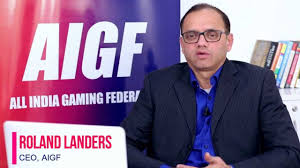
Roland Landers is widely regarded as one of the most influential public figures in India’s modern skill-based online gaming landscape. As the Chief Executive Officer of the All India Gaming Federation (AIGF), he has played a visible and strategic role in shaping policy discussions, regulatory debates, and industry standards surrounding digital skill gaming in India.
At a time when India’s gaming ecosystem is rapidly expanding and evolving, leadership that bridges the gap between policymakers, operators, and consumers has become increasingly important. Landers has positioned himself at the center of this dialogue, advocating for clarity, responsible participation, structured compliance, and long-term sustainability.
This article explores Roland Landers’ professional trajectory, public engagement, industry philosophy, and the broader impact of his leadership within India’s digital gaming economy.
The Context: India’s Expanding Skill-Gaming Industry
Before examining Landers’ individual role, it is important to understand the environment in which he operates.
India has witnessed exponential growth in online gaming over the past decade. Increased smartphone penetration, affordable data access, digital payments infrastructure, and a young population have all contributed to the rapid expansion of online skill-based platforms, including rummy, fantasy sports, esports, and other competitive formats.
However, growth has not come without complexity. Regulatory variations across states, taxation changes, public perception challenges, and legal distinctions between skill and chance have created a dynamic and sometimes uncertain environment.
Within this evolving landscape, Roland Landers has emerged as a consistent advocate for structured regulatory clarity.

Professional Role at AIGF
As CEO of the All India Gaming Federation (AIGF), Roland Landers leads one of India’s most recognized industry bodies representing online gaming operators. AIGF functions as a coordinating and advocacy organization focused on:
- Promoting self-regulatory frameworks
- Supporting skill-based gaming recognition
- Engaging policymakers
- Encouraging responsible participation standards
- Providing industry research insights
Landers’ role involves constant interaction with government agencies, regulatory stakeholders, tax authorities, legal experts, and member companies.
He operates at the intersection of business, public policy, and digital compliance.
Advocating the Skill vs. Chance Distinction
A central theme of Landers’ public commentary revolves around the legal and constitutional distinction between games of skill and games of chance in India.
Indian jurisprudence has historically differentiated between:
- Activities predominantly dependent on skill
- Activities primarily driven by chance
This distinction significantly influences how various gaming formats are regulated.
Landers has repeatedly emphasized that clarity around this differentiation is crucial not only for industry stability but also for consumer understanding and lawful operation.
He supports consistent legal interpretation across states to prevent fragmented regulatory environments.
Engagement in Regulatory Discussions
India’s regulatory framework for online gaming has evolved in recent years, including developments such as:
- Amendments to Information Technology rules
- Introduction of taxation reforms affecting gaming platforms
- State-level legislative proposals
- High court and Supreme Court observations
Landers has consistently participated in consultations and industry discussions surrounding these developments.
Rather than advocating unregulated expansion, he emphasizes structured compliance mechanisms that include:
- Transparent operating guidelines
- Responsible advertising standards
- Player protection safeguards
- Self-regulatory certification models
This balanced position has contributed to his reputation as a policy-oriented industry leader rather than a purely commercial advocate.
Media Visibility and Public Commentary
Roland Landers is frequently cited in national and economic publications when discussions around online gaming policy arise.
His commentary typically addresses themes such as:
- The need for regulatory consistency
- Economic contributions of the gaming sector
- Employment generation
- Technology investment
- Consumer safeguards
He has appeared in business interviews, policy panels, and digital economy forums where he represents the industry’s perspective.
Unlike promotional messaging, his tone in public forums tends to emphasize institutional stability and structured oversight.
Economic Contribution Perspective
Landers often underscores that online skill gaming is part of India’s broader digital economy. He points to several key contribution areas:
- Direct and indirect employment
- Startup ecosystem development
- Technology innovation
- Tax revenue
- Investment inflow
Below is an illustrative representation of sector growth trends frequently discussed in industry reports.
Industry Growth Trend
Responsible Gaming Emphasis
A recurring aspect of Landers’ policy advocacy is responsible participation.
He supports:
- Age verification protocols
- Self-exclusion mechanisms
- Deposit and spending controls
- Clear disclosure policies
- Transparency in promotional structures
By supporting these mechanisms, he positions the industry as capable of self-governance under structured oversight.
Public Sources and Industry Mentions
| Publication / Source | Focus Area | Type |
|---|---|---|
| Fortune India | Industry growth and regulation | Interview |
| Economic Times | Policy commentary | Quoted expert |
| AIGF Official Communications | Self-regulatory framework | Industry release |
Policy Engagement Timeline
| Year | Key Focus | Engagement Type |
|---|---|---|
| 2020 | Skill-based classification | Legal discussions |
| 2021 | State-level policy responses | Industry representation |
| 2023 | Taxation reforms | Public advocacy |
Industry Ecosystem Breakdown
Long-Term Vision
Roland Landers continues to support:
- Centralized regulatory clarity
- Predictable taxation frameworks
- Structured compliance mechanisms
- Transparent operational standards
- Responsible ecosystem growth
His leadership reflects a philosophy centered on balance: enabling innovation while supporting safeguards.
Roland Landers remains one of the most visible and policy-engaged figures within India’s skill-based gaming industry. Through consistent advocacy, media engagement, and institutional coordination, he has contributed to shaping discussions around legal clarity and responsible participation.
As India’s digital gaming ecosystem continues to mature, leadership that prioritizes regulatory alignment and consumer trust will remain essential. Roland Landers’ role within AIGF positions him as a key participant in that ongoing evolution.
As India’s digital gaming ecosystem continues to mature, leadership that prioritizes regulatory alignment and consumer trust will remain essential. Roland Landers’ role within AIGF positions him as a key participant in that ongoing evolution.
Looking ahead, the trajectory of India’s online skill-gaming sector is closely tied to policy stability and technological accountability. The rapid expansion of mobile internet usage, combined with digital payment adoption and increasing user familiarity with competitive online platforms, has created a powerful foundation for structured gaming environments. However, growth without guidance can lead to uncertainty. Landers’ approach consistently underscores the idea that sustainable development requires clear guardrails.
One of the defining challenges in India’s gaming landscape has been regulatory fragmentation. Different states have taken varying approaches to online gaming—some encouraging, others restrictive. In this complex setting, industry bodies like AIGF play a coordinating role, advocating for consistency. Landers’ involvement in policy consultations reflects a broader attempt to bridge regional differences and encourage dialogue between stakeholders.
Rather than framing discussions in purely commercial terms, Landers often positions the industry as part of India’s wider digital economy. This includes reference to startup innovation, local technology development, and employment opportunities generated by gaming companies. By situating skill-based gaming within the digital services ecosystem, he connects it to broader themes such as entrepreneurship, data infrastructure, and fintech integration.
Another recurring theme in Landers’ public commentary is responsible participation. As the scale of online gaming grows, so does the importance of safeguarding player well-being. Industry-wide adoption of age verification systems, transparent terms and conditions, fair dispute resolution mechanisms, and voluntary self-exclusion tools has become increasingly central to discussions about long-term viability. Landers’ position suggests that the future of skill gaming in India depends not only on growth metrics but also on credibility.
The distinction between skill and chance remains foundational. In India, this distinction is not merely theoretical; it carries constitutional and regulatory implications. Skill-based formats such as rummy and certain competitive platforms have historically been viewed differently under the law compared to pure games of chance. By consistently emphasizing this legal principle, Landers reinforces the importance of structured frameworks rather than reactive policy shifts.
Taxation reforms have also been a significant part of the conversation in recent years. Adjustments to GST structures and related fiscal policies have required industry adaptation. In public statements, Landers has highlighted the need for taxation systems that are predictable and administratively workable. From his perspective, clarity in taxation not only supports compliance but also encourages investment and operational stability.
Beyond regulatory alignment, technology integrity is another pillar of the evolving ecosystem. As online skill-based platforms scale, robust backend systems, data encryption, fraud detection tools, and transparent algorithmic processes become critical. Leadership at the federation level often involves discussions around best practices and standards that member platforms can adopt collectively. Landers’ engagement in these areas reflects a recognition that trust is built not only through law but through operational reliability.
India’s demographic structure also plays a role in shaping the future of skill gaming. With a large youth population and widespread smartphone access, the country represents one of the world’s most dynamic digital markets. However, digital engagement must be matched with digital literacy. Industry leaders, including Landers, have frequently pointed out the importance of educating users about responsible participation, budget management, and informed decision-making.
The broader global context also influences India’s gaming sector. International regulatory models, compliance frameworks, and consumer protection standards often serve as reference points during domestic policy discussions. While India’s legal environment remains unique, comparative analysis can offer insights into balanced governance structures. Industry bodies under Landers’ leadership often monitor global trends to inform local conversations.
Another dimension of Landers’ leadership lies in coalition building. Industry representation requires alignment among operators that may otherwise compete in the marketplace. Establishing shared codes of conduct, dispute resolution mechanisms, and ethical guidelines demands collaboration. By fostering collective standards, AIGF seeks to elevate baseline practices across the ecosystem.
Public perception also remains a crucial factor. Skill-based gaming continues to face misconceptions, often grouped together with broader gambling narratives. Landers’ communication strategy typically aims to clarify distinctions while promoting responsible frameworks. By maintaining an emphasis on transparency and compliance, he contributes to shaping a more nuanced public understanding.
In addition, structured industry research has become increasingly important. Economic impact reports, employment statistics, and digital infrastructure data help policymakers evaluate the sector beyond anecdotal evidence. Under organized industry representation, such data can inform constructive dialogue rather than reactive regulation. The role of data-driven analysis is likely to expand as the ecosystem matures.
As technology continues to evolve, new formats may emerge within the skill-gaming category. Competitive online environments, digital tournaments, and community-based formats are expected to grow. Ensuring that regulatory models remain adaptable will be essential. Leadership that anticipates rather than reacts to technological change will likely shape long-term outcomes.
Roland Landers’ ongoing participation in these discussions reflects the broader institutional evolution of India’s gaming sector. The conversation is no longer limited to whether online gaming should exist; it increasingly focuses on how it should function within a structured and accountable framework.
The future trajectory of India’s digital skill-gaming ecosystem will depend on sustained dialogue among policymakers, industry leaders, technology developers, and consumer advocates. Transparent compliance systems, predictable taxation, technological safeguards, and responsible engagement models are expected to define the next phase of growth.
In that context, leadership that emphasizes regulatory clarity, industry accountability, and consumer trust will continue to play a critical role. As digital participation expands and regulatory conversations evolve, the emphasis on balanced development remains central to the long-term sustainability of India’s skill-based gaming sector.